When does an ankle fracture need surgery?
The decision depends on displacement, stability, the number of malleoli involved, syndesmosis integrity, overall alignment and the condition of the skin and soft tissues.
Trauma • alignment • fixation
Not every ankle fracture requires surgery. When a fracture is unstable or displaced, surgery aims to restore joint anatomy and stability so that healing occurs in the correct alignment.
The choice of procedure depends on the diagnosis, alignment, tissue quality, activity level and the patient’s goals. Recovery protocols are individualised.
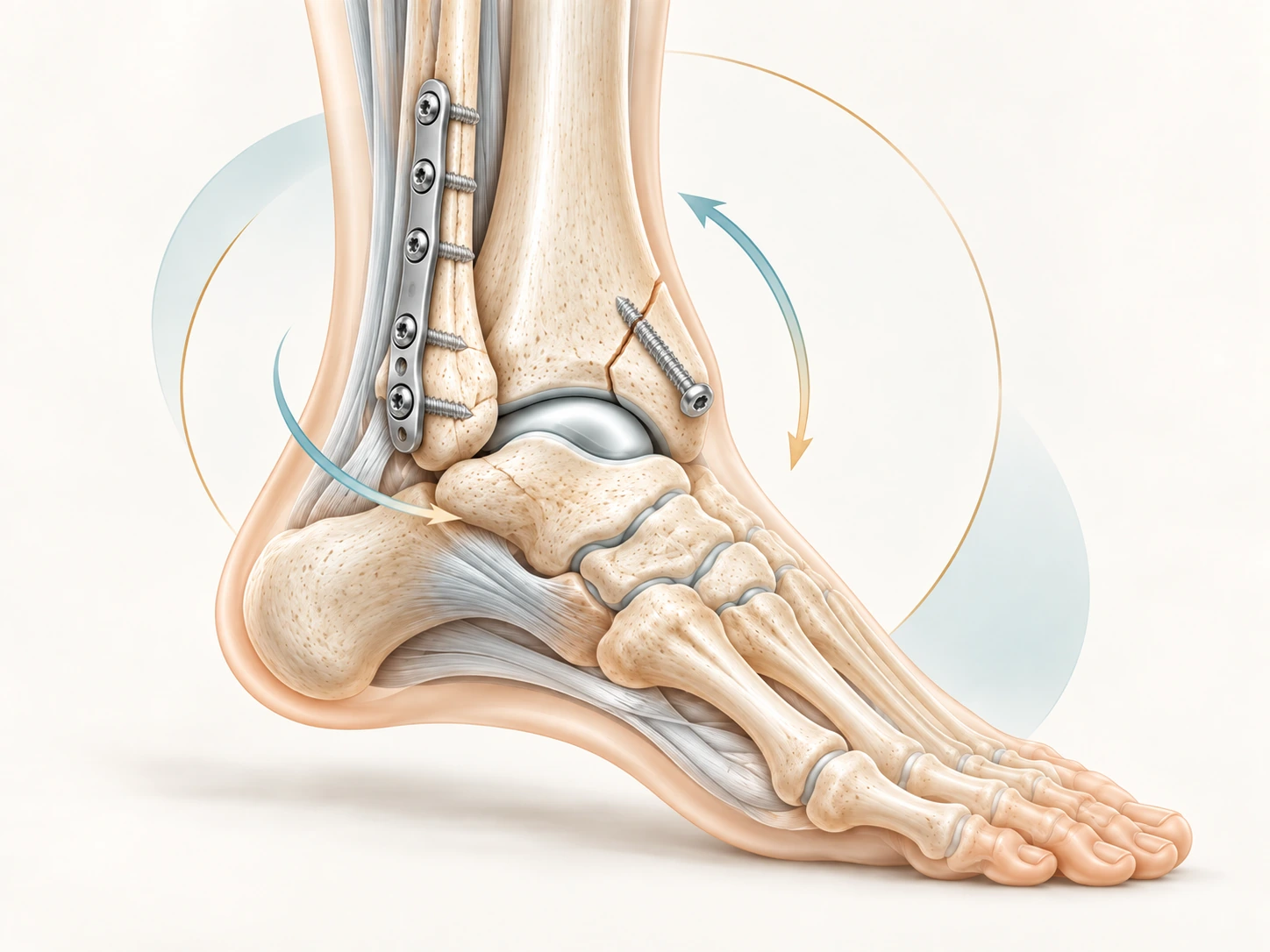
This illustration summarises ankle fracture fixation to restore bone alignment and support a safe recovery.
The decision depends on displacement, stability, the number of malleoli involved, syndesmosis integrity, overall alignment and the condition of the skin and soft tissues.
The fragments are reduced and usually stabilised with plates and screws. The syndesmosis is assessed and fixed if unstable. Some fractures require specific strategies depending on complexity or soft-tissue condition.
Weight-bearing is resumed according to fracture pattern, fixation stability and radiographic healing. Motion, strength and gait are then progressively restored through rehabilitation.
Even after satisfactory reduction, an intra-articular fracture can lead to stiffness, residual pain or post-traumatic arthritis. Sequelae sometimes require secondary reconstructive treatment.
Risks include infection, wound-healing problems, stiffness, hardware irritation, nerve injury, healing problems, thromboembolic complications and post-traumatic arthritis.
Source patient : AAOS OrthoInfo. General information, to be adapted to each clinical situation.
Helping you move forward, step by step.
A consultation is an opportunity to discuss your situation, goals and the different treatment options.